
Before You Need an Expensive Dental Treatment, Read This
For many people, visiting a dentist is often associated with pain or dental problems. As a result, most individuals avoid going to the dentist unless they experience severe toothache or discomfort.
However, regular dental checkups are essential even when you feel perfectly fine. Many oral health issues develop silently and may not cause noticeable symptoms until they become serious.
Understanding why preventive dental visits are important can help protect not only your teeth and gums, but also your overall health.
Your Mouth Is the Gateway to Your Health
Think about this simple analogy.
Imagine you drink water from the same tap several times a day, every day of the year. You may assume the water is perfectly safe. But what if the inside of the tap is rusted or filled with bacteria? Without checking inside, you would never know.
The same principle applies to your mouth.
You eat food multiple times daily, and everything you consume enters your body through one gateway—your mouth. If your mouth contains harmful bacteria, they can easily travel into your digestive system and bloodstream along with the food you eat.
Research shows that the human mouth contains nearly 20 billion bacteria at any given time, belonging to more than 700 different species. While some of these bacteria are beneficial, others can be harmful.
When oral diseases such as gum infections or tooth decay develop, harmful bacteria increase significantly. Over time, these bacteria may affect both oral and general health.
This is why professional dental examination is important. There is a big difference between simply looking at your teeth in a mirror and having them thoroughly examined by a dentist using clinical expertise and dental X-rays.
Oral Health Is Closely Linked to Overall Health
Many people are surprised to learn that oral diseases can affect the entire body.
Scientific research has shown links between poor oral health and several medical conditions, including:
-
Heart disease
-
Diabetes
-
High blood pressure
-
Joint problems
-
Pregnancy complications
-
Certain fertility issues
The connection between gum disease and heart disease is especially well known in the medical community.
In fact, many cardiologists now recommend that patients get a dental evaluation before undergoing major heart procedures. Treating gum infections beforehand helps reduce complications and improves treatment outcomes.
Maintaining good oral health therefore plays a vital role in supporting your overall well-being.
Early Detection Can Save Lives
Regular dental visits can also help detect serious health problems at an early stage.
Dentists are trained to identify early signs of oral cancer and precancerous conditions, often before patients notice any symptoms.
Many individuals diagnosed early were completely asymptomatic and had no pain at all. Early detection allowed timely treatment and significantly improved their prognosis.
The risk of oral cancer increases if you have habits such as:
-
Tobacco chewing
-
Cigarette or bidi smoking
-
Betel nut consumption
-
Chronic alcohol use
Routine dental examinations play a crucial role in screening and early diagnosis.
Why Tooth Problems Often Don’t Cause Pain Initially
Another common misconception is that if there is no pain, the teeth must be healthy. Unfortunately, this is not always true.
Most dental problems begin silently.
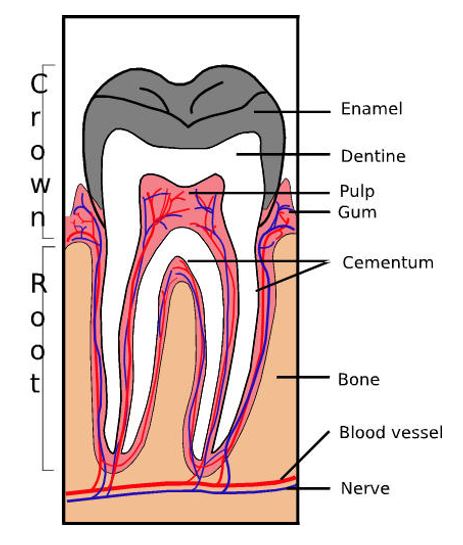
A tooth has three main layers:
-
Enamel – the outermost protective layer
-
Dentin – the middle layer with microscopic nerve endings
-
Pulp (Root Canal) – the innermost part containing nerves and blood vessels

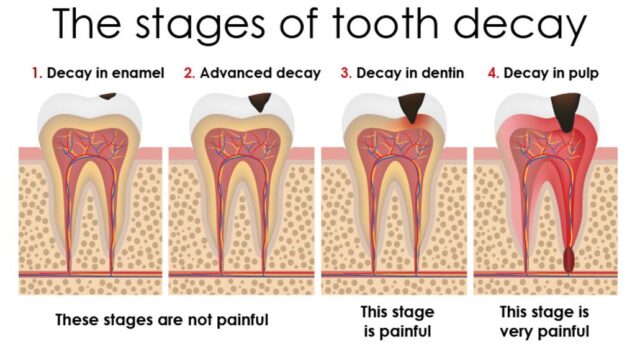
1. Enamel Stage – No Symptoms
Tooth decay usually begins in the enamel layer.
Enamel has no nerve supply, which means cavities in this stage typically cause no pain or discomfort. Without a dental examination, most people are completely unaware of the problem.
2. Dentin Stage – Mild Sensitivity
As decay progresses to the dentin layer, patients may start experiencing mild sensitivity to cold, hot, or sweet foods.
These symptoms are often ignored because the discomfort is minimal.
3. Pulp Stage – Severe Pain
When the infection reaches the pulp (root canal), the nerves inside the tooth become inflamed. This stage usually causes severe throbbing pain, swelling, or infection.
At this point, patients rush to the dentist for emergency treatment.
Treatment may require:
-
Root Canal Treatment, or
-
In severe cases, tooth extraction
Early diagnosis could have prevented this stage entirely.
Benefits of Regular Dental Checkups
Routine dental visits provide several important benefits:
-
Early detection of tooth decay
-
Prevention of gum disease
-
Oral cancer screening
-
Professional cleaning to remove plaque and tartar
-
Early treatment to avoid complex procedures
-
Better overall health monitoring
Most dentists recommend a dental checkup every six months, or at least once a year.
Prevention Is Always Better Than Cure
Visiting the dentist regularly takes very little time and cost compared to treating advanced dental problems later.
In fact, a routine dental visit often costs less than a restaurant meal and takes less time than watching a short film. Yet it can save you significant discomfort, time, and money in the future.
Detecting dental problems early allows simpler, faster, and more affordable treatment.
Take Care of Your Smile Before Problems Start
Your teeth and gums are essential not just for eating and speaking, but also for maintaining your overall health and confidence.
Even if you do not have tooth pain, regular dental checkups ensure that potential problems are identified and treated early.
Remember, healthy teeth don’t always mean pain-free teeth—many dental diseases remain silent until they become severe.
Scheduling routine dental visits is one of the best preventive health decisions you can make.
About the Author
Dr. Jay Kothari is a specialist dentist (Endodontist) with advanced expertise in Microscopic Root Canal Treatment and Microscopic Re-Root Canal Treatment.
He practices at Dant-Aarogyam Microscopic Dental Clinic in Ahmedabad, Gujarat, where modern dental technology and microscopic techniques are used to provide precise and comfortable dental care.
To learn more, visit:
www.microscopicdentist.com
